Let me tell you about a filmmaker who found an interesting way to make his debut feature happen.
Thomas Percy Kim raised funding for his film Isle Child outside the traditional Hollywood system.
The reported financing package was around $1.6 million, with more than $1 million raised through crowdfunding, followed by a larger private raise.
So how did he do it?
That's the interesting part.
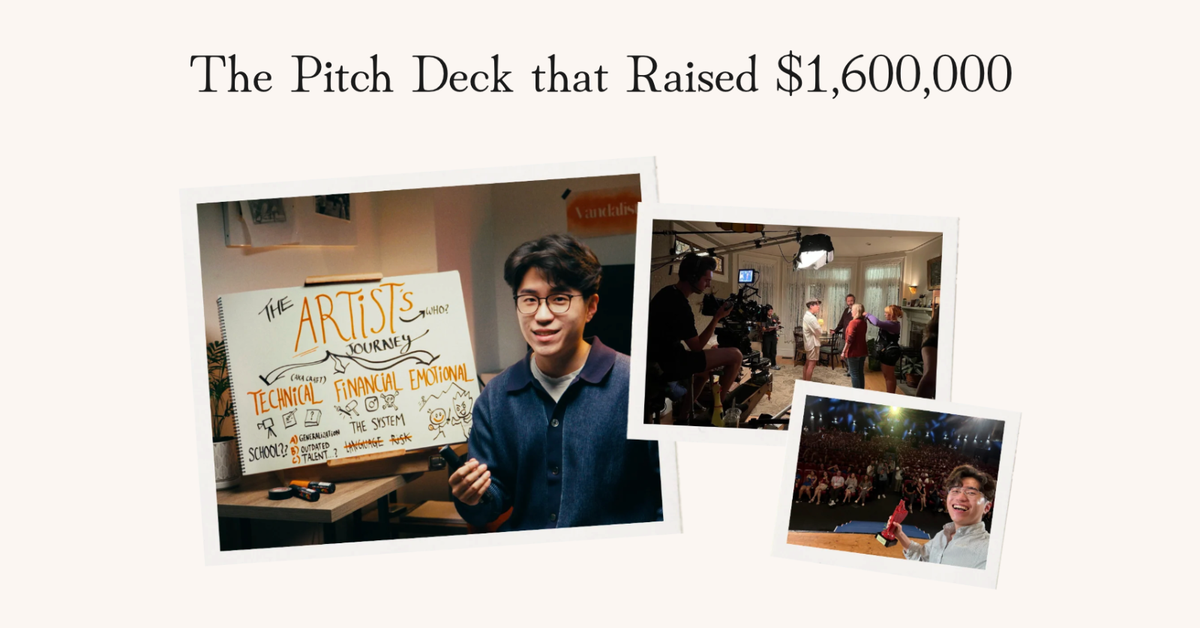
Before we begin, check his pitch deck first:
1. He Didn't Start by Asking for $1.6M
His feature grew from his award-winning short film Si.
The short was sold to HBO Max and featured Ki Hong Lee from The Maze Runner trilogy.
That short became his proof of concept.
It showed people:
"I can actually make this."
That's the first lesson.
If you're a first-time filmmaker, don't only talk about your feature.
Make something that proves you can execute.
2. He Used Crowd-Equity
Instead of simply asking people to donate money, Kim used WeFunder's crowd-equity model.
Investors could invest in the company associated with the film, with investments starting at approximately $100, and potentially participate in future film revenue.
The campaign reportedly raised more than $350,000 over approximately four months.
That momentum helped contribute to a further private raise of more than $850,000.
Together with additional financing, this formed the broader reported $1.6M financing package.
So the lesson isn't:
"Go start a crowdfunding campaign."
The lesson is:
Find a financing model that fits your film.
A friend of mine is building Crelace, where you can raise funds for your film/shortfilm/webseries, here is the screenshot of the platform

Here is the website link: https://www.crelace.com/ signup and get started, explore the site.
3. His Pitch Deck Was More Than a Movie Presentation
This is probably the part I want aspiring filmmakers to study the most.
His pitch deck wasn't simply:
"Here's my story."
It combined three things:
Pathos
Why should people care about this story?
Logos
Why does this make business sense?
Budget, comparable films, audience and distribution strategy.
Ethos
Why should people trust this filmmaker?
Awards, festivals, collaborators and track record.
His deck essentially answered:
Why this story?
Why now?
Why me?
Who will watch it?
How will we make it?
What is the budget?
What films are comparable?
How could investors potentially make a return?
That's how you turn a film idea into an investment opportunity.
4. He Didn't Just Wait for Investors
This is another important lesson.
Kim actively reached out to potential investors through platforms such as LinkedIn, identified people interested in film and Asian-American stories, and had direct conversations with them.
He didn't simply upload a campaign and wait.
He sold the project.
That's what fundraising really is.

What Can We Learn From This?
If you're a first-time filmmaker, don't think:
"Who will give me money?"
Think:
"What can I show people that makes them believe in me?"
Start with:
A great short film → proof of concept
A strong story → emotional connection
A clear audience → market potential
A professional pitch deck → business case
Credibility → trust
Outreach → investors
You don't have to start by selling a ₹10 crore film.
Start by proving that you can make something worth believing in.
Don't just ask people to fund your film. Give them a reason to believe in it.