If you make these type of short films you may get a feature film opportunity
Let me tell you something that most aspiring filmmakers get wrong.
They dream of writing the next Baahubali, KGF, or Pushpa.
Huge worlds.
Massive action sequences.
Hundreds of junior artists.
Crores of budget.
But here's the truth.
None of those films were the first films their directors made.
Before you think about scale…
learn how to write emotion.
Because audiences don't fall in love with budgets.
They fall in love with stories.
Short Film 1: A Simple Story That Changed a Career
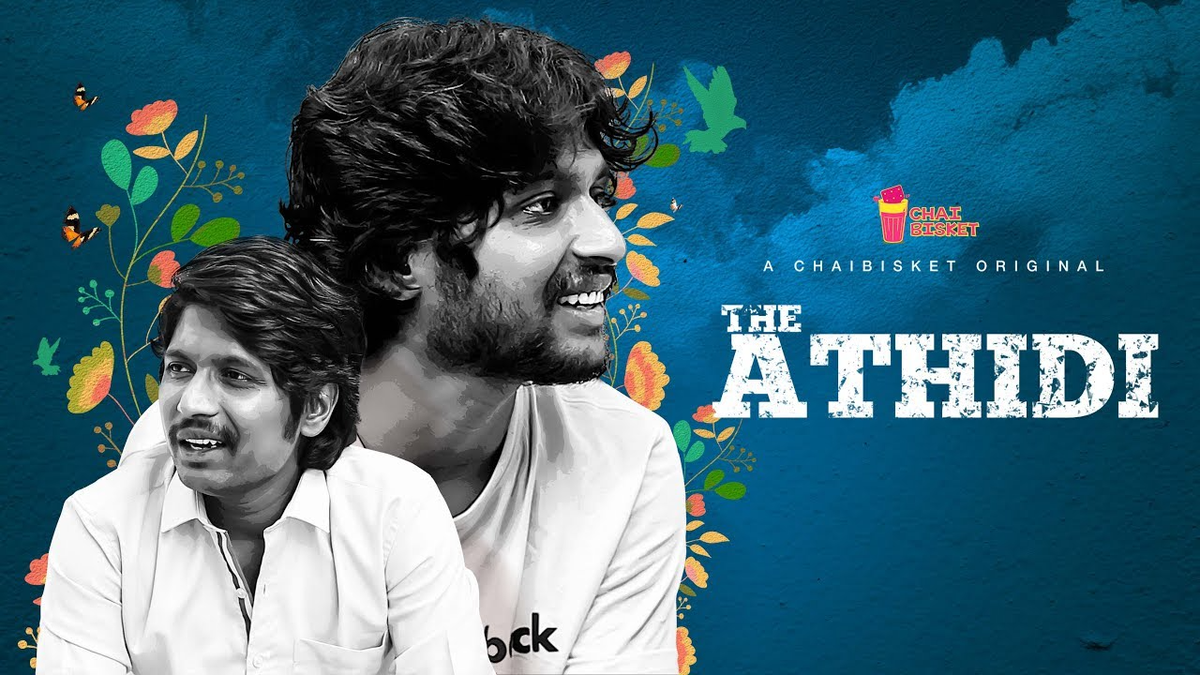
Watch this short film:
https://youtu.be/yuIdImosqLM?si=s7091-qe5V7PtnDe
Now observe it carefully.
It has:
A single location.
Only two major characters.
Almost no production complexity.
No expensive VFX.
No action sequences.
it has over 1.5 million views
Why?
In fact, if you look at the budget, there is hardly anything.
Most of the money probably went into creating the original background score by Kala Bhairava. Apart from that, it's a beautifully written story executed with minimal resources.
Why?
Because of the writing.
The film beautifully taps into human emotions and relatable sentiments.
The audience doesn't remember the budget.
They remember how the story made them feel.
And here's something even more inspiring.
The director of this short film later went on to direct Colour Photo, Mowgli, and other projects. Colour Photo even won the National Award.
That journey didn't begin with a ₹100 crore film.
It began with a beautifully written short film.
Short Film 2: Two Characters. One Room. Endless Emotions.
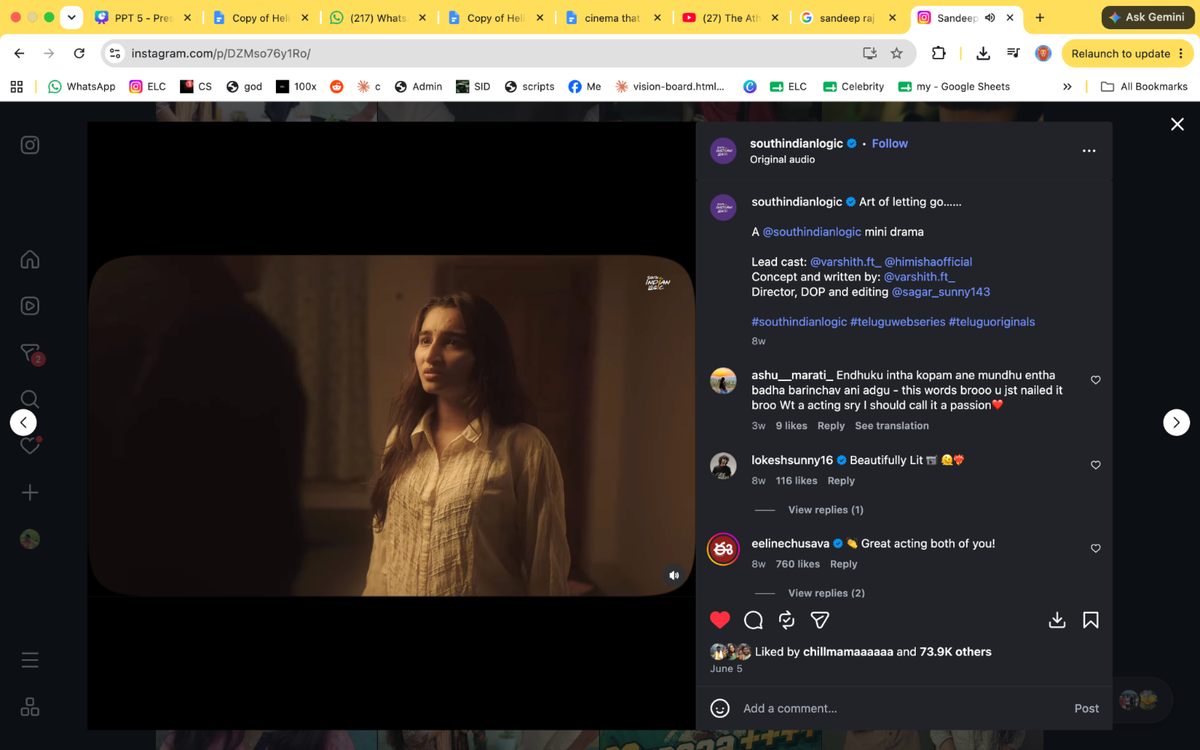
Watch It Here: https://www.instagram.com/p/DZMso76y1Ro/
Now think about another example.
This story happens inside a single room.
Just two characters.
No production extravagance.
No cinematic spectacle.
But emotionally?
It hits hard.
If you think about the budget, it is mostly just:
a good-quality camera,
a small technical crew,
and basic production expenses.
That's all.
The story explores a relationship situation that almost everyone experiences at some point in life.
That's why people connected with it.
Don't just watch the film.
Read the comments.
The comments tell you everything.
People aren't discussing the camera.
They aren't discussing the lighting.
They're saying things like:
"This happened to me."
"I felt this."
"I couldn't stop thinking about it."
That's exactly what you want as a filmmaker.
When audiences start relating your story to their own lives…
your film has already succeeded.
Short Film 3: A Brilliant Idea Is Better Than a Big Budget
Watch this one too:
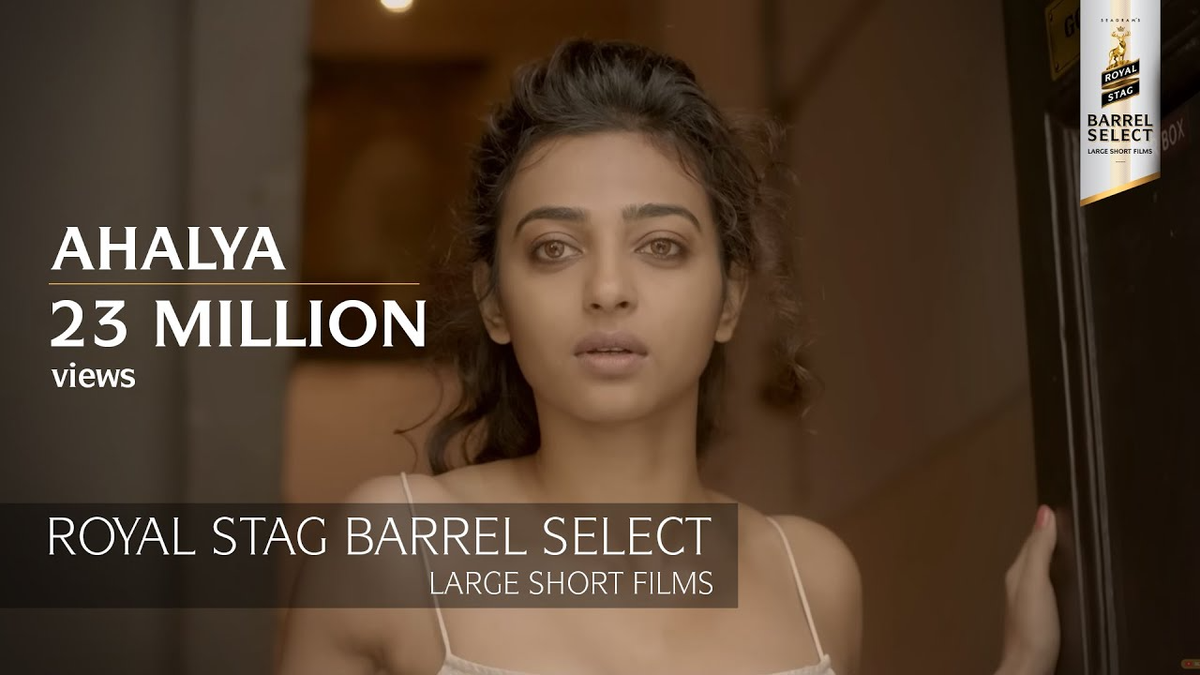
https://youtu.be/Ff82XtV78xo?si=NFqYijwowJkcAF-h
Again…
The budget isn't what makes it memorable.
The concept does.
The film presents:
a unique premise,
beautifully written characters,
mythology references,
sensual yet meaningful storytelling.
It feels fresh.
Different.
Confident.
And once again…
go to the comments.
You'll understand what audiences appreciated the most.
Not the production value.
Not expensive visuals.
People are talking about:
the idea,
the writing,
the emotions,
the ending,
the characters.
That tells you where the real power lies.
What All Three Films Have in Common
If you observe these three films carefully…
they all follow the same pattern.
They have:
limited characters,
one primary location,
controlled budgets,
simple production,
emotionally powerful writing.
None of them depended on money.
They depended on storytelling.
And that's why they created impact.
Your Audience Should Feel, Not Just Watch
Whenever you're writing a short film, ask yourself one question:
"What should the audience feel in this scene?"
Should they:
smile?
cry?
feel uncomfortable?
remember their first love?
think about their parents?
question their own decisions?
Because when the audience feels what your characters are feeling…
they become emotionally invested.
And emotionally invested audiences:
share your film,
recommend it,
remember it,
come back to watch your next one.
That's how good cinema grows.
What you need is:
one strong idea,
believable characters,
authentic emotions,
meaningful dialogue.
Especially in low-budget filmmaking…
dialogue becomes one of your strongest weapons.
When you don't have visual spectacle…
your writing has to carry the audience.
My Two Cents
If I can give you one piece of advice, it's this:
Before writing a large-scale feature film…
learn to write a small film that works.
Can you make people laugh?
Can you make them cry?
Can you make them remember someone they love?
Can you make them sit silently after the film ends?
If you can do that with two characters in one room…
you can eventually do it on a much bigger scale.
Start small.
Master emotion.
Master dialogue.
Master human relationships.
Because budgets impress people for a weekend.
Emotions stay with them for years.
These are just three short films that inspired me.
I'm sure there are hundreds more out there.
Watch them.
Study them.
Read the comments.
Understand why audiences connected with them.
Then go back…
and write your own story…