
The 180-Degree Rule in Filmmaking
The 180-degree rule is a fundamental guideline in filmmaking that helps maintain spatial consistency in a scene. It ensures that the audience clearly understands where characters are in relation to each other on screen.
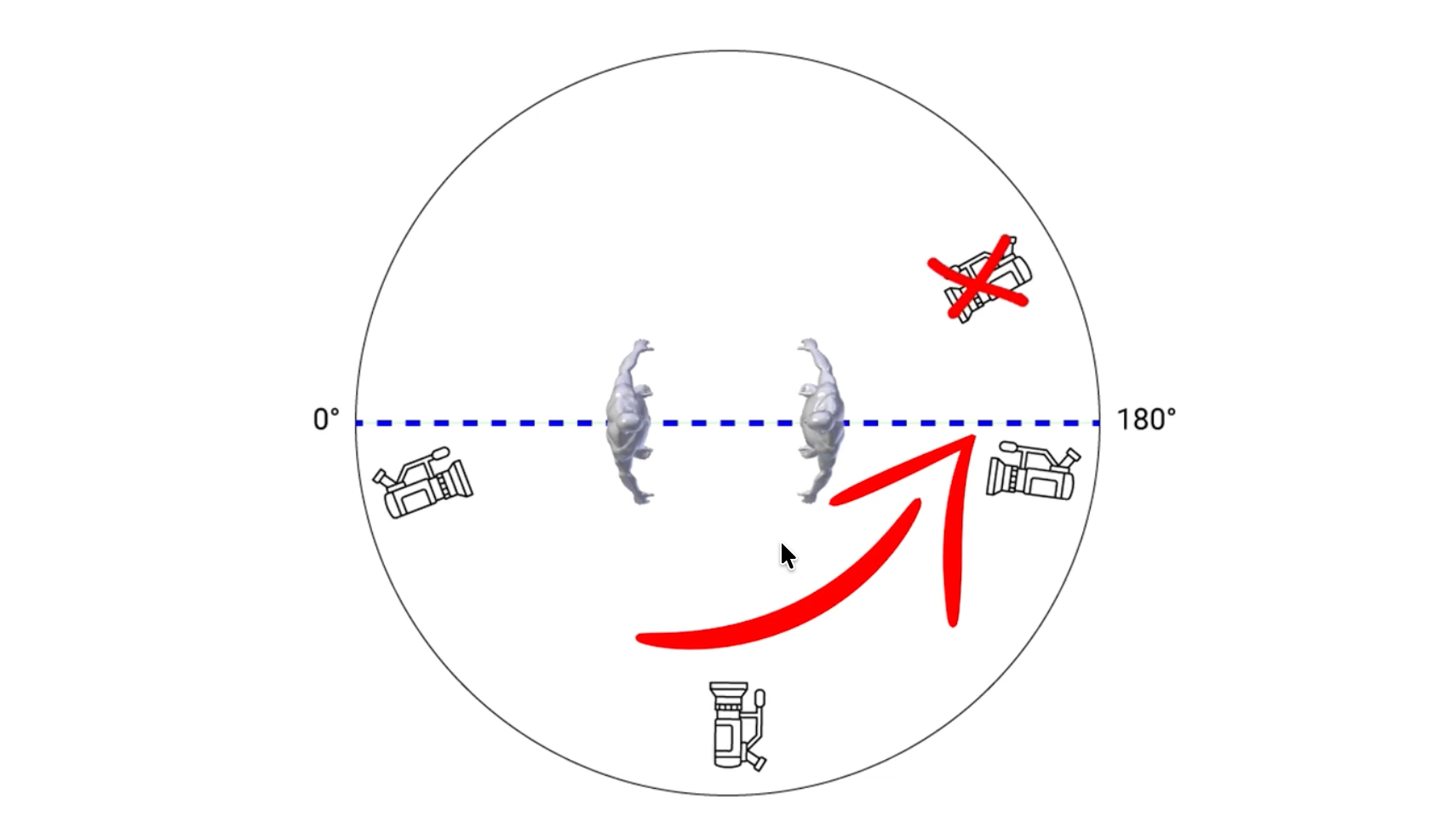
1) What the Rule Means
Imagine an invisible line (called the axis of action) running between two characters or along the direction a character is moving.
The camera must stay on one side of this imaginary line.
This maintains consistent screen direction.
Example:
If Character A is on the left and Character B is on the right, they should remain in those positions across all shots, unless the camera crosses the line intentionally.
2) Why It Matters
Prevents audience confusion.
Maintains geographical clarity.
Helps the scene feel natural, grounded, and easy to follow.
Makes conversations and movements visually coherent.
3) Where It Is Commonly Used
Dialogue scenes (two people talking).
Chase scenes.
Driving shots.
Action/stunt choreography.
Sports and battlefield sequences.
4) When You Can Break the Rule
You can cross the line, but only for a purpose, such as:
To show confusion
To create tension
To indicate a power shift
To surprise the viewer
But, to do it smoothly, filmmakers use a Neutral Shot —
A shot placed on the axis itself (like a direct front-facing shot) — before shifting the camera to the other side.
This resets the audience’s orientation.
Example Breakdown (Simple Dialogue Scene)
Remember:
Follow the rule for clarity.
Break the rule with intention.
🎬 Want to learn how to prompt like a filmmaker?
Get the Ultimate Filmmaker’s Prompt Pack — 100+ prompts for writing, visuals, and shot design.Ultimate Film Makers Prompt Bundle
Get the bundle now - Click Here For The Bundle
YouTube Link: https://youtu.be/-neaXufCd54?si=fTu9ocCq059fA_SX
YouTube Link English: https://youtu.be/iW0bKUfvH2c?si=6Jg3JPnhLWCUYFOK